The expanse of land where Indiana, Illinois, Ohio, Michigan, Wisconsin, and parts of eastern Minnesota are now established was owned by France until 1763. The French utilized the region as an avenue to facilitate travel and administration between French holdings in Canada, and southern administrative regions in Louisiana. French outposts were strategically established near waterways, and in proximity to Indigenous settlements where relationships could be formed to facilitate trade. French outposts in modern day Michigan, Indiana, and Illinois allowed for proliferation of the fur trade between French settlers and Indigenous populations. Trade between these communities expanded beyond the fur trade, however, and the exchange of enslaved Black individuals also occurred at trading outposts. France ceded the land to Great Britain in 1763, but French settlers were not required to free enslaved people in the region after the exchange in land ownership. The largest administrative change regarding the status of enslaved people in the region would come after Great Britain ceded the land to the United States in 1783.
After being acquired by the United States, the region became known as the Northwest Territory. Sectional debates regarding the Northwest Territory obviated the need for legislation surrounding the ownership of land in the region, as well as the rights of settlers. Several states, including Virginia, Massachusetts, New York, and Connecticut, fiercely contested the rights to expand their borders through the acquisition of land in the Northwest Territory. Conflict also began to arise between individual citizens regarding rightful ownership of land in the Northwest Territory, as land bounties were frequently used to reward men for their military service in the Revolutionary War, and many individuals insisted that they had purchased land in the Northwest Territory directly from Indigenous individuals. In order to settle these disputes, leaders of the United States were tasked with passing legislation to obviate a clear and legal path to acquiring land in the Northwest Territory.
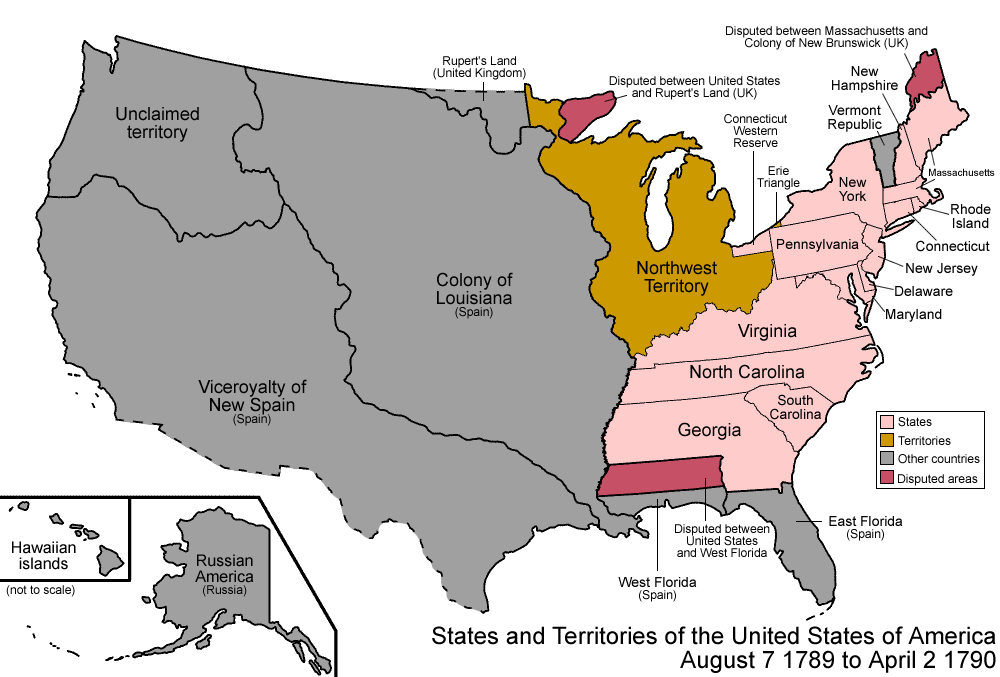
The Confederation Congress codified the legal guidelines for land ownership and governance within the Northwest Territory by enacting the Northwest Ordinance of 1787. This legislative act served to solidify the federal government’s overarching control over U.S. territories, and manifested its jurisdictional supremacy through enacting regulations on slavery in the Northwest Territory. However, while the Northwest Ordinance of 1787 technically prohibited slavery in the Northwest Territory, ambiguity in the legal frameworks established by the Northwest Ordinance led to the continued existence of slavery in the Northwest Territory.
The illegality of slavery in the Northwest Territory was specified in Article Six of the Northwest Ordinance, which states, “There shall be neither slavery nor involuntary servitude in the said territory, otherwise than in the punishment of crimes whereof the party shall have been duly convicted: Provided, always, That any person escaping into the same, from whom labor or service is lawfully claimed in any one of the original States, such fugitive may be lawfully reclaimed and conveyed to the person claiming his or her labor or service as aforesaid” (Continental Congress, 1787). While technically outlawing slavery, the distinction between “involuntary” servitude and indentured servitude allowed practices resembling slavery to persist under the guise of indentured labor. This Article also permits enslavement as a punishment for convicted crimes, and endorses the capture and forced return of enslaved individuals who escaped into the Northwest Territory. Additionally, Congress made later statements which implied that laws introduced in the Northwest Ordinance were not retroactive, which led proponents of slavery in the Northwest Territory to believe that there were circumstances where anti-slavery laws did not apply, including cases where enslaved people were purchased in the region prior to implementation of the Northwest Ordinance.
As the Northwest Territory was partitioned into smaller territories that would later become independent states, each territorial government adopted distinct strategies in addressing the issue of slavery within its jurisdiction. The establishment of the Indiana Territory on July 4th, 1800, catalyzed focused deliberations on slavery in the region, shaped by the Territory’s geographical context and existing cultural practices.
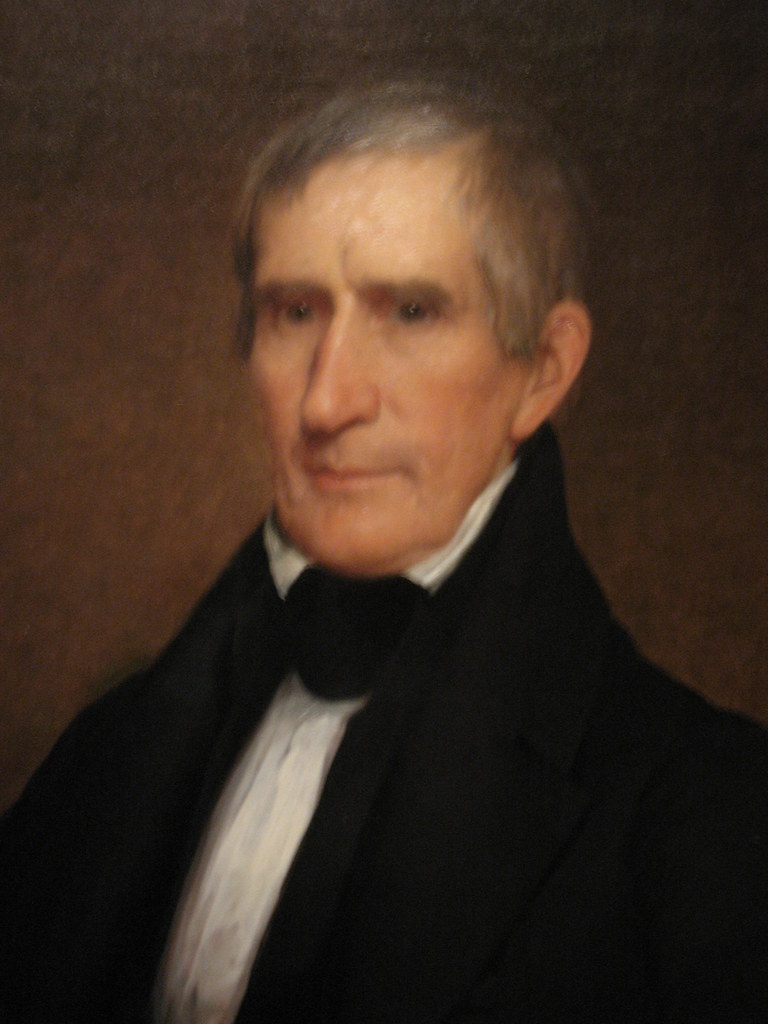
Pro-slavery sentiment was widespread among early leaders of the Indiana Territory, which diminished enforcement of established anti-slavery laws. In fact, the largest concentration of enslaved people in the Indiana Territory was in Vincennes, which was the capital of the Indiana Territory. William Henry Harrison, who remained in the role of Indiana Territorial Governor until 1812, was an extremely outspoken supporter of repealing Article Six of the Northwest Ordinance. Harrison, along with fellow pro-slavery politicians in the Indiana Territory, contested that establishing legal avenues for slavery to exist in the region would attract a higher number of settlers to the territory, including wealthy settlers who relied on the labor of enslaved individuals. These leaders also argued that requiring citizens to relinquish enslaved individuals who were purchased outside of the Indiana Territory, or prior to the institution of the Northwest Ordinance, would be depriving them of their legally purchased property.
As Harrison’s request for the repeal of Article Six of the Northwest Ordinance was denied, pro-slavery politicians and lawmakers sought creative legal solutions to obviate a path for circumnavigating anti-slavery laws. They chose to exploit the fact that Article Six of the Northwest Ordinance did not outlaw indentured servitude, only “involuntary” servitude. After the Indiana Territory gained over 5,000 white male inhabitants, it was reclassified as a stage-two territory, as part of a three-stage process that would eventually culminate in achieving statehood. After becoming a stage-two territory, guidelines were codified for redefining enslaved individuals entering the Indiana Territory as indentured servants. The Act Concerning the Introduction of Negroes and Mulattoes into this Territory was introduced in 1805, and stated that enslaved people who were brought into the Indiana Territory must be presented to the county clerk within thirty days, and must agree to their terms of indentured servitude in the presence of the clerk. If they refused their contract of indenture, enslavers were granted sixty days to return to a region where slavery was legal to sell the enslaved individual in question. Under these conditions, slavery continued, merely under a separate legal classification.
Enslaved people in the Indiana Territory who were reclassified as indentured servants were often subject to periods of indenture lasting for several decades, sometimes up to ninety-nine years. They would sign indenture contracts which they could not read, under the threat of being sold further south, or being punished for not carrying out the will of their enslavers.
In April of 1816, Congress allowed representatives from the Indiana Territory to begin drafting the First State Constitution, which reiterated the prohibition of slavery and involuntary servitude, but still allowed enslavers to redefine enslaved people as indentured servants. Once the constitution was finalized and territorial requirements were satisfied, Indiana achieved statehood on December 11, 1816. The pervasive contradictions between the anti-slavery provisions and the lived realities of enslaved individuals in Indiana created a volatile legal landscape. Court cases became pivotal in defining the status of enslaved individuals and the overall enforcement of anti-slavery laws. Among the most significant of these cases was State v. Lasselle, an 1820 Indiana Supreme Court case which directly challenged the legality of holding an individual in slavery within Indiana. In the case of State v. Lasselle, the Indiana Supreme Court elected that a woman named Polly Strong should be released from her enslaver, Hyacinthe Lasselle, in accordance with established anti-slavery laws. However, while the case of State v. Lasselle set a legal precedent for freeing enslaved people who sought freedom through the court system, slavery and abuse of laws related to indentured servitude still persisted in Indiana after the case of State v. Lasselle.
The phenomenon of reclassifying enslaved individuals as indentured servants has led to discrepancies in archival records, as census records cannot be trusted to accurately quantify the number of enslaved individuals who resided in Indiana. Ambiguity in documentation regarding Black individuals in early Indiana makes it difficult to differentiate between genuinely free Black individuals and those who were serving long-term sentences of indentured servitude. Furthermore, the lack of agency that was provided to enslaved individuals in signing indenture contracts has resulted in the compilation of indenture records that misrepresent the reality of circumstances when removed from the context of coercion. Overall, these circumstances have ensured that existing archives may not accurately portray the true extent of slavery in Indiana, making it difficult for historians to perform research on the topic, or to accurately depict the conditions faced by enslaved people in Indiana.
Additional Resources
Northwest ordinance. (2025). The Mount Vernon Ladies’ Association. https://www.mountvernon.org/library/digitalhistory/digital-encyclopedia/article/northwest-ordinance
Continental Congress. (1787). An ordinance for the government of the territory of the United States, north-west of the river Ohio. Library of Congress. https://www.loc.gov/resource/bdsdcc.22501/
Constitutional Convention of Indiana. (1816). Indiana state constitution of 1816. Indiana Archives and Records Administration. https://www.in.gov/iara/services-for-government/laws-rules-and-policies/collections-state-constitutions/full-text-of-the-1816-constitution/
Indiana from NW ordinance to statehood. (2026). State of Indiana. https://www.in.gov/usa250/educational-information/indiana-from-nw-ordinance-to-statehood/
 Slavery in Indiana