-Clark County (Ind.) Clerk. (1805). Negro register Clark County. Indiana State Archives and Records Administration. https://indianamemory.contentdm.oclc.org/digital/collection/p16066coll68/id/254/rec/6
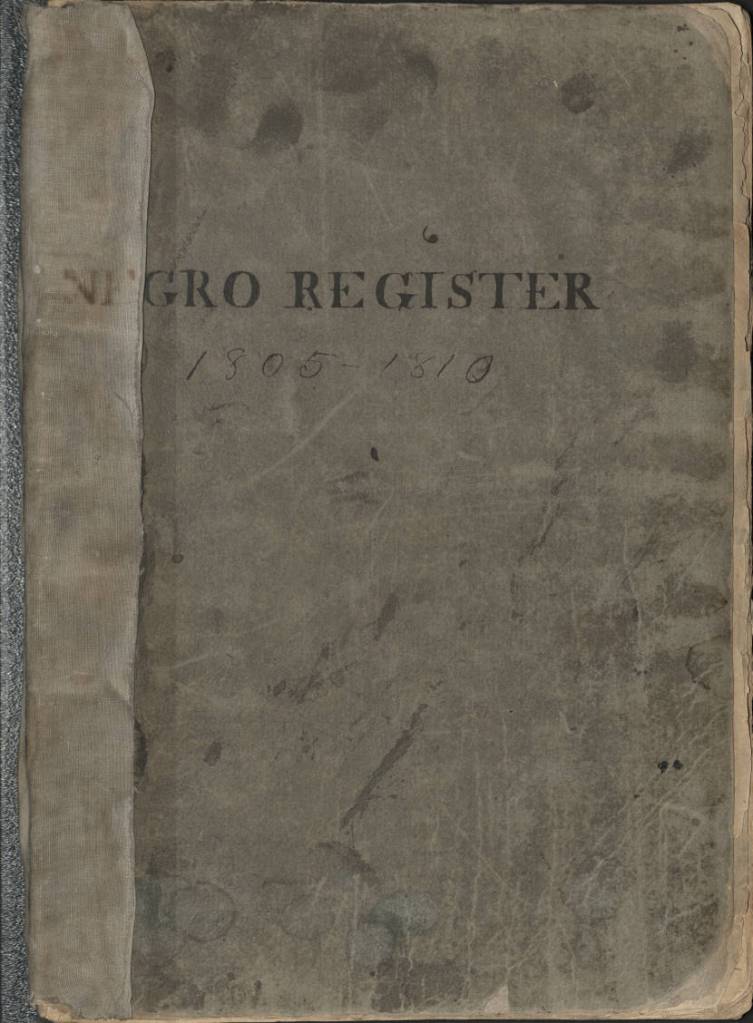
This is the earliest record regarding slavery in the Indiana Territory in the State Archives collection, which is maintained by the Indiana Archives and Records Administration. The Indiana Archives and Records Administration acknowledges that this register does not account for every enslaved individual who was in the county at that time, but it does serve to paint a comprehensive image of slavery in the region. This record states the names and ages of enslaved people, as well as information about their enslavers, and where they relocated from before arriving in the Indiana Territory.
-Indiana Territory Court of Common Pleas. (1805-1807). Slave registry, Indiana Territory, Knox County. Knox County Public Library. https://indianamemory.contentdm.oclc.org/digital/collection/ving/id/8813/rec/6
This record enumerates the number of enslaved individuals and enslavers in Knox County, Indiana. This registry would have been created while Vincennes, which was located in Knox County, was the capital of the Indiana Territory. Vincennes held the largest population of enslaved people in the Indiana Territory. This record offers insight into the demographics, names, and status of enslaved people in Knox County, and it reveals how local courts managed records relating to enslaved people.
-Knox County Circuit Court. (1822). Knox County court record for Fanny vs. Ewing. Knox County Public Library. https://indianamemory.contentdm.oclc.org/digital/collection/kcpl/id/46854/rec/6
This record details a Knox County Circuit Court decision on a case similar to State v. Lasselle and Mary Clark v. G.W. Johnston, involving a 17-year-old girl named Fanny, who also sought freedom after enduring involuntary servitude. The Knox County Circuit Court chose to grant Fanny her freedom, despite denying Polly Strong, Francis Jackson, and Mary Bateman Clark their freedom in years prior. This shift in judgment reflects the influence of the Indiana Supreme Court rulings in the cases of State v. Lasselle and Mary Clark v. G.W. Johnston, marking a tangible change in judicial attitudes toward freeing enslaved individuals.
-Decatur County Circuit Court. (1848). Luther A. Donnell court record, 1848. Indiana State Library. https://indianamemory.contentdm.oclc.org/digital/collection/p16066coll31/id/2462/rec/29
This source details the indictment of Luther A. Donnell for his involvement in aiding Amanda, a fugitive slave from Kentucky, in her attempted escape from slavery. The court case was centered on the actions of Donnell, an abolitionist in Indiana, who was charged with assisting Amanda in fleeing from her enslaver, George Ray, in 1847. Witnesses included Woodson Clark, a slave catcher and friend of George Ray, and his son Richard Clark. This court record provides insight into the legal consequences faced by abolitionists in Indiana who supported individuals seeking freedom from enslavement, and highlights the role of both abolitionists and slave catchers in legal proceedings.
-Knox County Circuit Court. (1801). Purcell, Noah and Andrew Purcell vs. Robert Buntin and Henry Hurst summons. Indiana Memory. https://indianamemory.contentdm.oclc.org/digital/collection/ving/id/11837/rec/3
This resource highlights the practice of slave patrols in Indiana, where pro-slavery individuals actively hunted down enslaved people to return them to their enslavers for financial rewards. This record documents a case in which Noah and Andrew Percell sued Robert Buntin, a clerk of the Knox County Court of Common Pleas, and Henry Hurst for failure to compensate them after they captured a fugitive enslaved person and returned them to their enslaver.
-Knox County Circuit Court (1820). Knox County court record for Beamon vs. Smirl, 1820. Knox County Public Library https://indianamemory.contentdm.oclc.org/digital/collection/kcpl/id/46567/rec/19
This collection of records pertains to the case of Beamon v. Smirl, a Knox County Circuit Court case involving two enslavers who were implicated in the sale and kidnapping of Nathanial Boothe, a free Black man whom Smirl mistakenly believed to be enslaved. Boothe had originally filed a lawsuit for his freedom in New Orleans, Louisiana, but the court ruled that his status as a free Black person needed to be verified in Vincennes, Indiana. According to the court documents, Boothe was a skilled stableman, known as an ostler, with extensive knowledge of horses and blacksmithing. He worked for James Smirl, the owner of a livery stable, who wrongly believed Boothe was enslaved. Under this assumption, Smirl agreed to sell Boothe to Beamon. However, after realizing his mistake regarding Boothe’s status, Beamon refused to pay Smirl, leading Smirl to sue Beamon for non-payment.
-Knox County Circuit Court. (1835). Knox County Circuit Court record for Johnson vs. Emison with mention of Nero and Judy, 1835. Knox County Public Library. https://indianamemory.contentdm.oclc.org/digital/collection/kcpl/id/46228/rec/5
This collection contains records relating to the case of Johnson v. Emison, in which Peggy Johnson sued Samuel Emison in the Knox County Circuit Court for his nonpayment of $500 for the purchase of two enslaved people who were legally redesignated as indentured servants.
-Knox County Circuit Court. (1822). Knox County court record for Nero vs. Emison, 1822. Knox County Public Library. https://indianamemory.contentdm.oclc.org/digital/collection/kcpl/id/46685/rec/6
This record details how Nero, the child of an enslaved woman named Judy, petitioned the Knox County Circuit Court for his freedom from Samuel Emison. Nero and Judy were involved in the case of Johnson v. Emison 13 years later. Nero was held in indentured servitude by a man named James Johnson. Nero stated that his original indenture to James Johnston was to expire when he reached 21 years of age, and his petition for this case asserted that he was over 21 years of age. Emison purported that he purchased Nero from the widow of James Johnston in 1818, and he did not believe that Nero’s period of indenture had expired.
-Knox County Circuit Court. (1804). Knox County probate record for Isaac Decker, 1804. Knox County Public Library. https://indianamemory.contentdm.oclc.org/digital/collection/kcpl/id/44076/rec/50
This is the will of Isaac Decker, who resided in the Indiana Territory. In his will, he leaves a “bond-woman” named Jenny, a “bond-man” named Sam, and an enslaved woman named Rachel to his wife.
-Knox County Circuit Court. (1814). Knox County probate record for John McClure, 1814. Knox County Public Library. https://indianamemory.contentdm.oclc.org/digital/collection/kcpl/id/44676/rec/59
This is the will of John McClure, who resided in the Indiana Territory. In his will, he leaves a “negro man” named Aaron and a “negro woman” named Sarah to his wife. He left his daughter two enslaved people named Esther and Harry, and left his son two enslaved people named Edmond and Will. He also requests that Frank, an enslaved teenager, be sold immediately and that the profits should be used to pay off his debts.
-Knox County Circuit Court. (1815). Knox County probate record for William Welton, 1815. Knox County Public Library. https://indianamemory.contentdm.oclc.org/digital/collection/kcpl/id/44682/rec/60
This probate record is for William Welton. The record shows that Welton’s wife took “one negro woman” from his estate, who was listed at the price of $237. There is a sheet of items from Welton’s estate which lists that two “negro boys” named Ben and Bill were “appraised and not sold.”
-Knox County Circuit Court. (1816). Knox County probate record for Antoine Marshal, 1816. Knox County Public Library. https://indianamemory.contentdm.oclc.org/digital/collection/kcpl/id/44702/rec/61
This probate record is for Antoine Marschal. The inventory and appraisement report attached to the probate record includes the following entry: “One mulatto man aged about 25 years, named Muellie, born of a woman slave in this country, but there’s some doubt as to freedom or slavery.”
-Knox County Circuit Court. (1818). Knox County court record for Elizabeth Jones vs. Grace, a woman of color. Knox County Public Library. https://indianamemory.contentdm.oclc.org/digital/collection/kcpl/id/46080/rec/62
This record details the case of Elizabeth Jones v. Grace, a woman of color. Grace was held as an indentured servant, and escaped from Jones. Jones instructed her brother, Archibald McClure, to bring her complaint before the court in order to facilitate the arrest and return of Grace. Grace was ultimately returned to Elizabeth Jones.
 Slavery in Indiana